Standalone devices that encode HDMI or SDI to H.264 or H.265 and stream to YouTube, Twitch, Facebook and custom endpoints — without a PC. Magewell Ultra Stream vs Ultra Encode vs Kiloview compared across codec, protocol support, NDI output, 4K, cellular bonding and simultaneous streaming destinations.
H.265 halves bitrate vs H.264 at the same quality. Simultaneous NDI output for local production. Essential for venues with slow upload speeds. £350 ex-VAT.
No PC required — plug in, configure once, stream indefinitely.
A hardware encoder is a dedicated standalone device that accepts HDMI or SDI video from a camera and encodes it to a compressed digital stream for delivery over the internet — without any computer, software or operating system. Connect a camera, connect the encoder to your network, enter your YouTube or Facebook stream key in the web interface once, and the encoder streams automatically whenever it is powered on.
Unlike PC-based encoding (OBS, Wirecast), hardware encoders have no Windows update failures, no driver conflicts, no OBS crashes and no CPU encoding overloads. They are the correct solution for permanent streaming installations — weekly church services, fixed venue cameras, broadcast contribution links and any scenario where the stream must start reliably without any technical operator.
Fig 1. H.265 (HEVC) delivers the same visual quality as H.264 at approximately half the bitrate. For venues with 6 Mbps upload, H.265 enables a clean 1080p60 stream where H.264 would struggle.
Fig 2. Hardware encoder signal flow. A camera connects once via HDMI or SDI. The encoder streams to up to 4 platforms simultaneously over the internet. Magewell Ultra Encode models also output Full NDI to the local network simultaneously — feeding OBS, vMix, Wirecast or Magewell Director without any additional hardware.
Fig 3. Kiloview P3 bonded cellular. Multiple SIM cards from different networks are bonded together — their upload bandwidth pools and if one SIM fails the others maintain the stream. No venue broadband required. Essential for sports, outdoor events and churches in buildings without reliable internet.
Full Specification Comparison
All 11 hardware encoders — scroll right on smaller screens · ✓ = supported · — = not supported
† NDI output: Magewell Ultra Encode range outputs Full NDI (lossless, ~150 Mbps/channel on Gigabit). Kiloview outputs NDI|HX (H.265 compressed, ~5–30 Mbps). Full NDI is preferred for production environments; NDI|HX suits networks with limited bandwidth. · Kiloview M2 is unique in accepting VGA and HDMI simultaneously — designed specifically for lecture theatres with legacy VGA projectors.
Protocol & Standard Guide — What Each Term Means
Hardware encoders support a range of output protocols. Understanding each helps you select the right encoder for your destination and network conditions.
SRT
Secure Reliable Transport. UDP-based with automatic packet retransmission — streams survive packet loss without disconnecting. Includes AES-128/256 encryption. The most reliable streaming protocol for live production. Supported by YouTube, Facebook and all professional ingest servers.
Output · Encrypted
RTMP
Real-Time Messaging Protocol. TCP-based — any packet loss causes permanent stream failure requiring reconnect. The legacy standard for YouTube, Facebook and Twitch. Reliable on stable broadband; less suited to cellular or variable-quality networks.
Output · Standard
HLS
HTTP Live Streaming. Apple's adaptive bitrate streaming protocol — delivers video in small HTTP chunks via a web server. Higher latency than SRT/RTMP but works through any standard web proxy or CDN. Supported by all devices with a browser.
Output · High latency
Full NDI
Network Device Interface. High-quality IP video over standard Gigabit Ethernet — approximately 100–250 Mbps per source. Auto-discovered on the local network; appears in vMix, OBS (NDI plugin), Wirecast and Magewell Director. Only Magewell Ultra Encode range outputs Full NDI simultaneously with internet streaming.
Local network · Lossless
NDI|HX2
NDI High Efficiency — H.265 compressed NDI at approximately 5–30 Mbps. Suitable for Wi-Fi and lower-bandwidth networks where Full NDI is impractical. Kiloview encoders output NDI|HX rather than Full NDI. Less quality than Full NDI but far more bandwidth-efficient.
Local network · Compressed
UDP/TS
MPEG Transport Stream over UDP. The traditional broadcast contribution protocol used in professional broadcast facilities, satellite uplinks and set-top box infrastructure. Supported by Magewell Ultra Encode and Kiloview professional encoders. Used where the destination is broadcast infrastructure rather than a streaming platform.
Broadcast contribution
H.264 / AVC
The most widely supported video compression standard. Used by Magewell Ultra Stream. Compatible with every streaming platform and destination. Higher bitrate than H.265 for equivalent quality — Ultra Stream HDMI needs 6–9 Mbps for 1080p60 where Ultra Encode (H.265) needs 3–5 Mbps.
Encoding · Standard
H.265 / HEVC
Next-generation compression achieving the same quality as H.264 at approximately half the bitrate. Used by Magewell Ultra Encode and all Kiloview encoders. Supported by YouTube, Facebook, Twitch and all professional ingest servers. Critical for venues with limited upload bandwidth or cellular streaming.
Encoding · Efficient
AES-128 / AES-256
Advanced Encryption Standard — encrypts the SRT stream end-to-end. Prevents interception of live streams over public internet or cellular networks. Magewell Ultra Encode and Kiloview encoders support AES encryption on SRT outputs. Required for corporate, legal and government streaming.
Security · SRT encryption
Bonded Cellular
Kiloview P3 specific. Multiple 4G/5G SIM cards from different networks are combined — bandwidth pools and resilience increases. If one SIM loses signal (in a stadium, tunnel or rural area), the others maintain the stream. The definitive solution for location streaming without fixed broadband.
Kiloview P3 only
ONVIF
Open Network Video Interface Forum — the standard for IP camera interoperability. Some Kiloview encoders can receive ONVIF IP camera streams as an additional source alongside HDMI/SDI. Allows integration of ONVIF-compatible IP cameras into encoding workflows without additional hardware.
IP camera input
RTSP
Real Time Streaming Protocol. Used to pull a live stream from an encoder for display on a video player or integration into a production system. Hardware encoders typically provide an RTSP output allowing any RTSP-compatible player (VLC, media players, monitoring systems) to receive the live feed on the local network.
Local monitoring
💡 Ultra Stream vs Ultra Encode — when to choose which: Choose Ultra Stream when you need simple, set-and-forget streaming to 1–4 RTMP/SRT platforms at 1080p and broadband is reliable (10+ Mbps upload). Choose Ultra Encode when you need H.265 efficiency for slow broadband, simultaneous NDI output for a local production network, UDP/TS broadcast contribution, or 4K output (HDMI Plus / SDI Plus). For venues with poor broadband, the H.265 efficiency of Ultra Encode or the bonded cellular of Kiloview P3 are the correct solutions.
Platform & Service Compatibility
All hardware encoders in this comparison support RTMP and SRT — accepted by every platform below. Configure up to 4 simultaneous stream destinations in the encoder's web interface.
YouTube✓ RTMP/SRT
Facebook✓ RTMP/SRT
Twitch✓ RTMP/SRT
Kick✓ RTMP/SRT
Vimeo✓ RTMP/SRT
LinkedIn✓ RTMP/SRT
Wowza✓ RTMP/SRT
AWS IVS✓ RTMP/SRT
Castr✓ RTMP/SRT
Restream✓ RTMP/SRT
Church Online✓ RTMP/SRT
Dacast✓ RTMP/SRT
Software Compatibility
Hardware encoders stream independently — no software required for basic streaming. For NDI integration (Ultra Encode only) or advanced production workflows, the software below connects to the encoder's outputs.
NDI-capable production software (Magewell Ultra Encode — Full NDI output)
Every encoder with key specifications, ideal use cases and direct links.
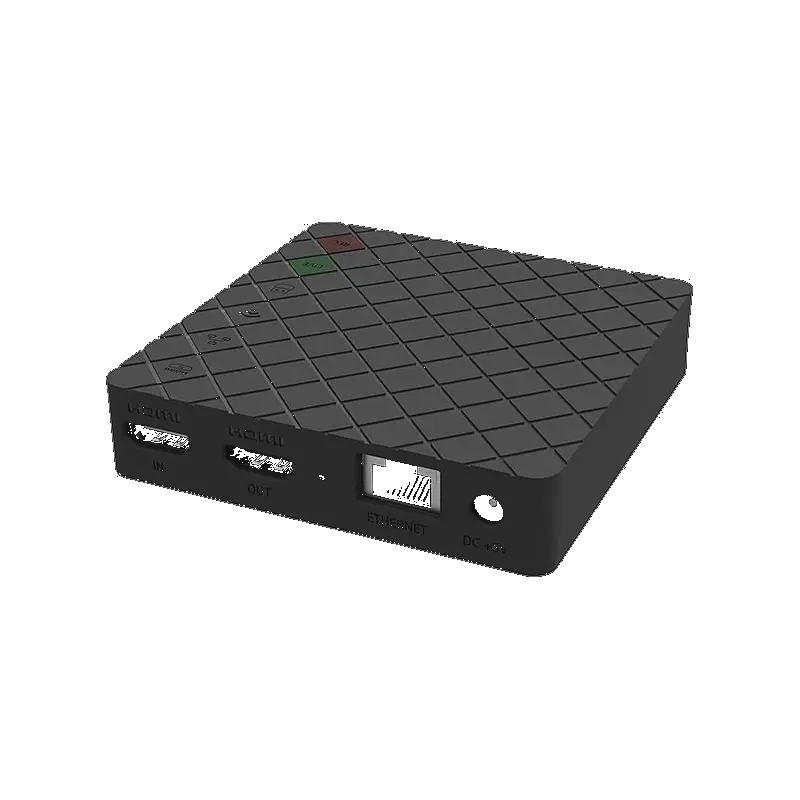
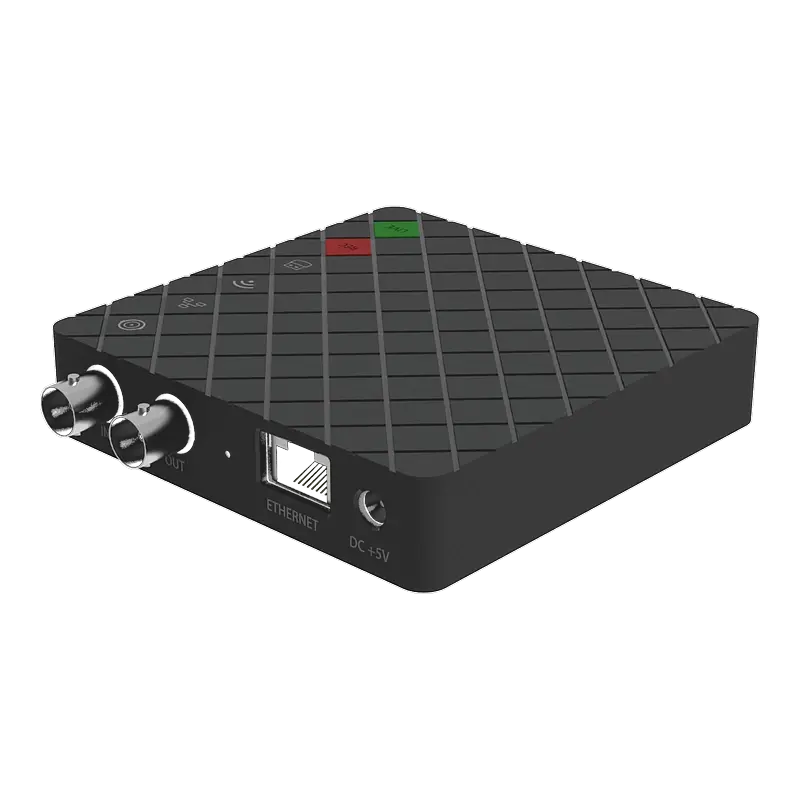
Magewell Ultra Stream — H.264 · Simple streaming · No NDI · Configure once
Magewell Ultra Stream
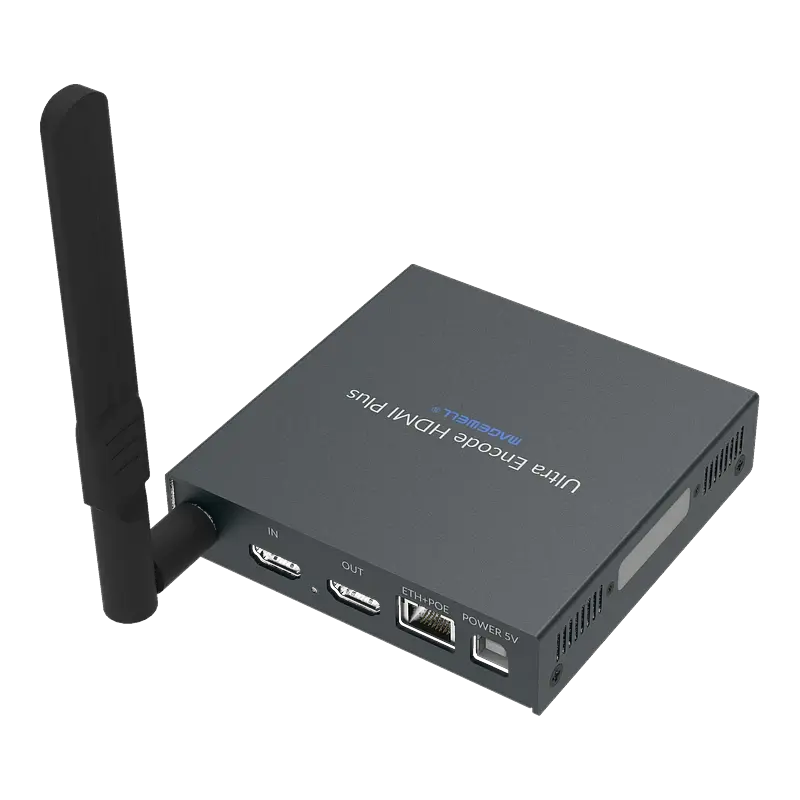
Ultra Stream HDMI
£315 ex-VAT
InputHDMI 1.4
CodecH.264
Max res.1080p60
NDI outNo
Sim. dests4 RTMP/SRT
Wi-FiYes
Ideal for: Weekly church services, corporate video feeds, event streaming and any permanent installation where a non-technical volunteer needs to press one button and go live. Set up once, stream reliably every week.
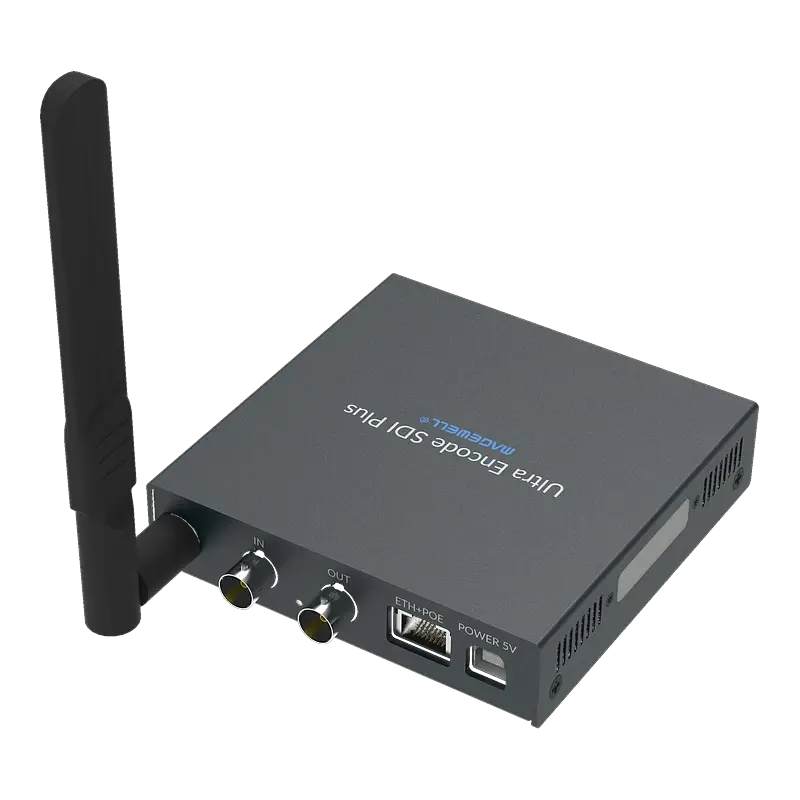
Ideal for: Same as HDMI version but for 3G-SDI broadcast cameras. For houses of worship and event venues with existing SDI camera infrastructure — no need to replace cameras for internet streaming.
Magewell Ultra Encode — H.265 · Full NDI simultaneously · 4K on Plus models
Magewell Ultra Encode
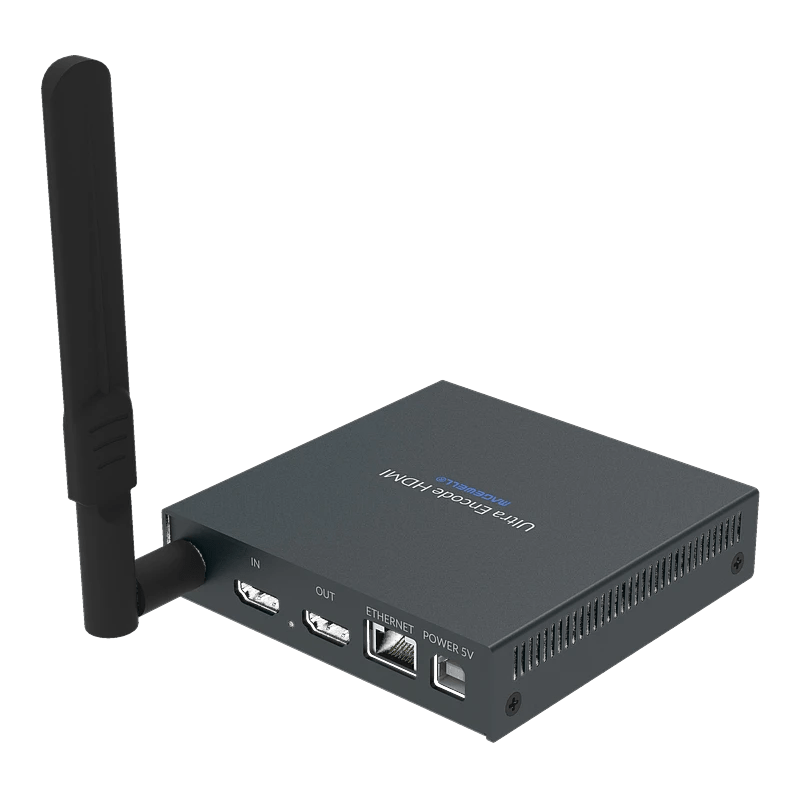
Ultra Encode HDMI
£350 ex-VAT
InputHDMI 1.4
CodecH.265
Max res.1080p60
NDI outFull NDI
ProtocolsSRT+RTMP+HLS+NDI
Wi-FiYes
Ideal for: The upgrade from Ultra Stream — H.265 for half the bitrate, plus simultaneous Full NDI output to vMix/OBS on the local network. For venues with slow broadband or needing both internet stream and local production feed simultaneously.
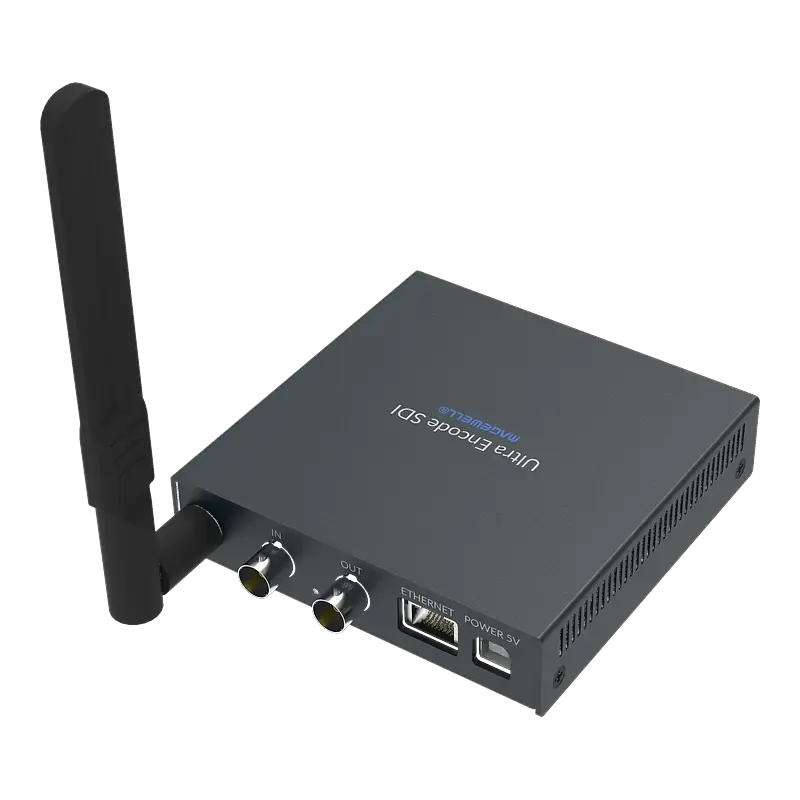
Ideal for: H.265 SDI encoder with simultaneous Full NDI. For broadcast cameras in churches, studios and events — SDI infrastructure streams to YouTube while NDI feeds a local vMix or Director production system.
Ideal for: 4K HDMI 2.0 H.265 encoder with Full NDI. For 4K cameras streaming to YouTube 4K while simultaneously outputting Full NDI for local 4K production. The flagship 4K HDMI encoder.
Ideal for: 6G-SDI 4K H.265 encoder with Full NDI. For 4K broadcast cameras with SDI output. Streams 4K30 over the internet while feeding the full 4K feed as NDI to local production.
Ideal for: HDMI and 3G-SDI inputs with H.265 and Full NDI. For venues that need to switch between an HDMI camera and an SDI source, or use either without changing hardware.
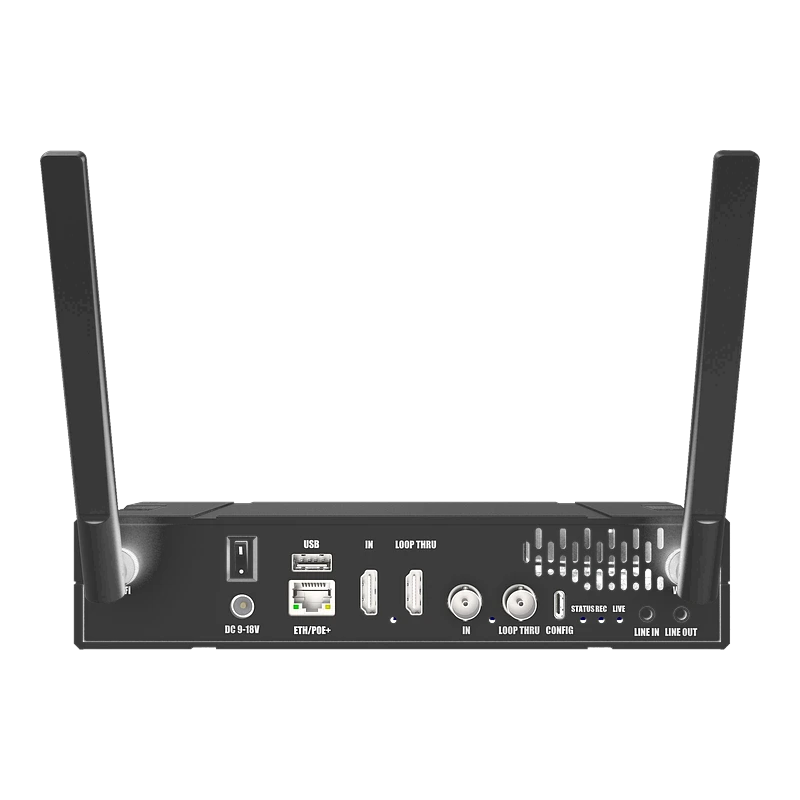
Ideal for: Professional 4K H.265 encoder for broadcast facilities and large events. HDMI and SDI inputs, NDI|HX output, SRT for reliable delivery. Professional rack-mount form factor.
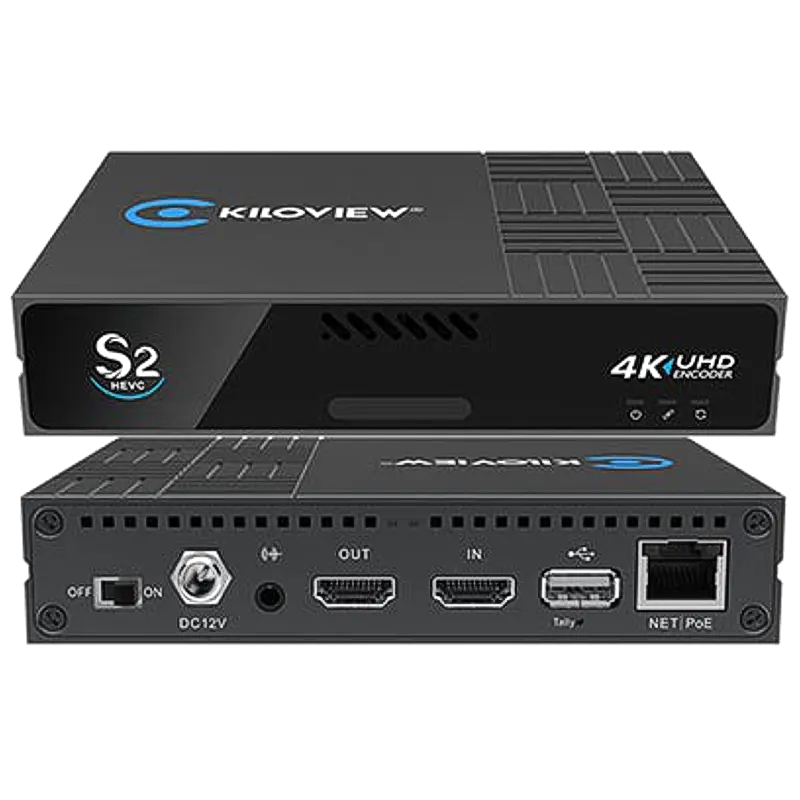
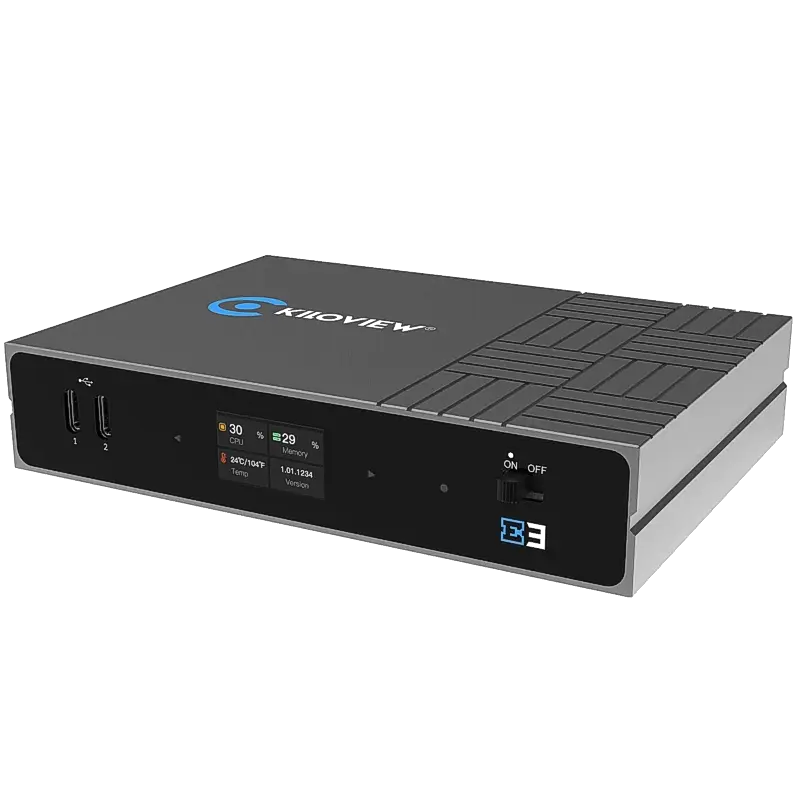
Ideal for: Two completely independent 4K H.265 encoder channels in one unit. Two cameras to two different destinations simultaneously — e.g. main stage and overflow room, or two different event streams.
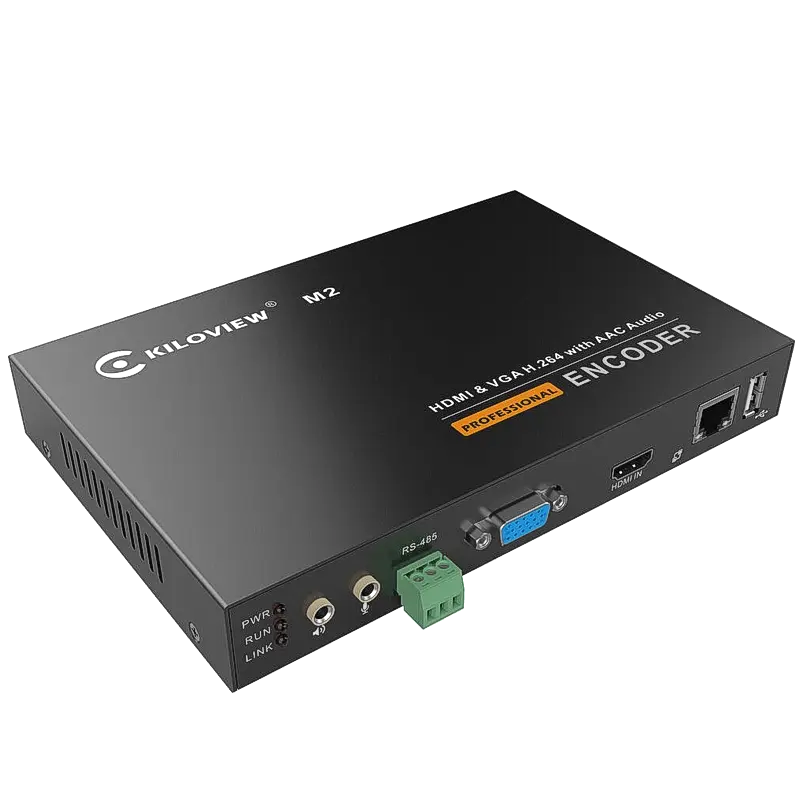
Ideal for: Designed specifically for lecture theatres with VGA projectors. Accepts HDMI (camera) and VGA (presenter laptop via projector) simultaneously. The only encoder in this comparison with VGA input.
Clear recommendations matched to the most common scenarios.
⛪
Weekly church service streaming
Magewell Ultra Stream HDMI or SDI
Configure once, stream every week. Volunteers press one button. No Windows, no OBS, no crashes. 4 platforms simultaneously. Wi-Fi or Ethernet.
🌐
Slow broadband (under 6 Mbps upload)
Magewell Ultra Encode HDMI
H.265 delivers 1080p60 quality at 3–5 Mbps vs H.264's 6–9 Mbps. Doubles effective broadband capacity for the stream. Essential for rural venues.
🎬
Stream AND local NDI production
Magewell Ultra Encode (any)
Only the Ultra Encode range outputs Full NDI simultaneously with internet streaming. Camera feeds vMix/OBS locally AND YouTube at the same time from one encoder.
📡
4K streaming to YouTube
Magewell Ultra Encode HDMI Plus
4K HDMI 2.0 input, H.265 4K60 output. Streams 4K to YouTube while simultaneously outputting 4K Full NDI to the local production network. £425 ex-VAT.
🏟️
No broadband — outdoor / sports
Kiloview P3 5G Bonding
Multiple SIM cards bonded together. No venue broadband required. H.265 SRT with AES-256 encryption. The definitive location streaming solution.
🎓
Lecture theatre with VGA projector
Kiloview M2 HDMI + VGA
The only encoder accepting HDMI and VGA simultaneously. Older lecture theatres with VGA projectors stream camera (HDMI) and slides (VGA) to Panopto or YouTube.
📹
Two independent events simultaneously
Kiloview E3 Dual Channel 4K
Two completely separate 4K H.265 encoder channels in one unit. Two cameras, two streams, two destinations — e.g. main hall and overflow simultaneously.
📡
SDI broadcast camera to stream
Magewell Ultra Encode SDI
3G-SDI input. H.265. Full NDI simultaneously. Stream existing broadcast cameras to YouTube/Facebook without HDMI adapters or replacing camera infrastructure.
Frequently Asked Questions
What is a hardware encoder?
A hardware encoder is a standalone device that accepts HDMI or SDI video and encodes it to a compressed stream for delivery over the internet — without a PC. It has no operating system, no driver updates and no software to crash. Configure it once via a web browser, and it streams automatically whenever powered on. Hardware encoders are far more reliable than PC-based encoding for permanent installations.
What is the difference between H.264 and H.265?
H.265 (HEVC) achieves the same visual quality as H.264 at approximately half the bitrate. For 1080p60: H.264 needs 6,000–9,000 kbps; H.265 achieves the same quality at 3,000–5,000 kbps. This matters enormously in venues with limited upload bandwidth. Magewell Ultra Encode and Kiloview use H.265. Ultra Stream uses H.264.
What is the difference between SRT and RTMP?
RTMP uses TCP — any packet loss causes permanent stream failure. SRT uses UDP with automatic packet retransmission — streams survive packet loss without disconnecting. SRT also includes AES encryption. For streaming from venues with variable network quality (cellular, older broadband), SRT is significantly more reliable than RTMP. Both protocols are supported by YouTube, Facebook and most platforms.
What does simultaneous NDI output mean on the Ultra Encode?
Magewell Ultra Encode outputs Full NDI to the local network at the same time as streaming to internet platforms — without any additional configuration. The camera appears as an NDI source in vMix, OBS, Wirecast and Magewell Director simultaneously with a YouTube/Facebook live stream from the same device.
How many platforms can one encoder stream to at once?
Both Magewell Ultra Stream and Ultra Encode support 4 simultaneous RTMP/SRT destinations. Enter YouTube, Facebook, a church platform and a custom RTMP endpoint — the encoder streams to all four from one camera connection. No cloud relay service (Restream) needed.
Which encoder is best for venues with poor broadband?
Two options: (1) Magewell Ultra Encode with H.265 — halves the bitrate requirement at the same quality; a 4 Mbps upload can deliver a clean 1080p stream where H.264 would need 8 Mbps; (2) Kiloview P3 with bonded 5G — combines multiple SIM cards for bandwidth aggregation and network redundancy, independent of venue broadband entirely.
What is bonded cellular on the Kiloview P3?
The P3 uses multiple 4G/5G SIM cards simultaneously, pooling their bandwidth and providing redundancy. If one SIM connection drops in a stadium or rural area, the other SIMs maintain the stream. The total bandwidth is the sum of all SIM connections. Essential for location streaming without fixed internet.
Not sure which encoder suits your venue?
Tell us your upload speed, camera type and streaming destinations — we'll recommend the right encoder and help you configure it correctly.
Disclaimer: Specifications, pricing and availability correct at time of publication (June 2026) and subject to change. H.265/H.264 bitrate figures are approximate — actual requirements vary with scene complexity, motion content, encoder settings and preset. Upload speed headroom of 1.5× the target bitrate is recommended for stable streaming. Kiloview cellular bonding performance depends on SIM card availability, network coverage and operator data plans in your area. SRT encryption availability depends on firmware version and encoder configuration. All platform compatibility (YouTube, Facebook, Twitch etc.) is based on their published RTMP/SRT ingest specifications at time of writing — platform requirements may change. All trademarks are the property of their respective owners. nuuo.co.uk is a trading name of iView Data Ltd, Leicester, UK.